My Natural Hair Stopped Growing: A 10-Step Length Retention Checklist (With Fixes)

If your hair feels stuck, it is usually breakage – not a lack of growth. Use this checklist to find the cause and start retaining length.
If you have been staring at your hair in the mirror thinking, “Why is my natural hair not growing?” you are not alone. Most of the time, your hair is growing – it is just not staying. That is the difference between hair growth and length retention.
Here is the truth: you can have a solid routine, use “good” products, and still feel stuck at the same length for months because your ends are quietly breaking off. The good news? Once you identify what is causing the breakage, you can fix it without doing the most. To speed up the process, track what you do and how your hair responds, grab my free hair tracker. Grab my free hair tracker here:👇
Shrinkage is Real
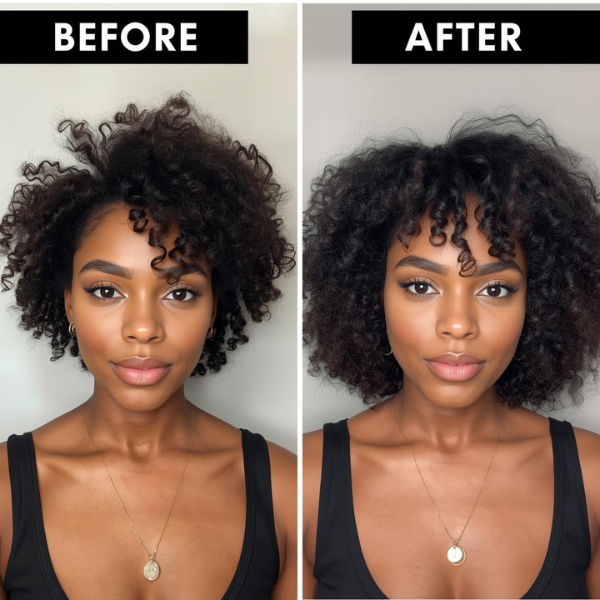
Before we jump in, remember that shrinkage is real – especially for coily, kinky, and curly textures. Your hair can be longer than it looks. Shrinkage is not the enemy. A characteristic of healthy hair is shrinkage. As your hair dries, your natural curl pattern contracts. This contraction is an indicator of your hair’s elasticity and ability to maintain moisture. Shrinkage is actually a good sign that the cuticles of your hair are intact and protected. The goal of this checklist is to help you maintain healthy growth, so the length you achieve actually shows up over time.
Hair Growth vs Length Retention
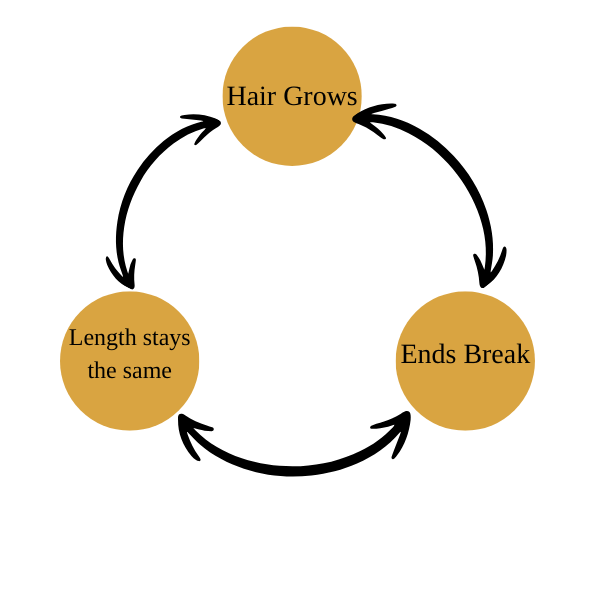
Hair growth vs length retention (quick reality check): hair typically grows about half an inch per month on average (some people more, some less). If your hair seems “stuck,” one of these is usually happening:
✅ Your hair is growing but your ends are breaking at the same rate,
✅ You are retaining length in some areas but losing it in others (like the crown), or
✅ Your hair is growing but shrinkage is hiding the length.
So instead of only asking, “How do I make my hair grow?” ask, “What is stopping me from keeping the length I already grew?” ❓
That is what we are solving today.
Now, let us turn this checklist into action. Start by picking the top two items that sound most like you. Fixing everything at once can be overwhelming. Small, consistent changes beat a perfect routine you never stick to.
Moisture is not lasting (your hair stays dry most of the week)
🔎Signs to look for:
- Your hair feels dry 1-2 days after wash day
- Products seem to sit on top of your strands instead of soaking in.
- You get tangles fast because dry hair grabs onto itself.
✔️Quick fixes that actually help:
- Build moisture in layers: start with water (or damp hair), then a leave-in, then seal with a light oil or butter.
- If you love the LCO/LOC method, keep it simple: do not pile on five products. Two to three layers is enough.
- Refresh midweek with a water-based spritz and a small amount of leave-in on the driest sections, then seal your ends.
You are skipping deep conditioning or rushing it
🔎Signs to look for:
Quick fixes that actually help: • Deep condition weekly or biweekly depending on how dry your hair gets. • Give it time: aim for 20-30 minutes. Add gentle heat (warm cap, hooded dryer, or warm towel)
- Hair feels rough or “crispy” even after conditioning.
- Detangling takes forever and you lose more hair than usual.
- Your wash and go looks dull and feels hard to soften.
✔️Quick fixes that actually help:
- Deep condition weekly or biweekly depending on how dry your hair gets.
- Give it time: aim for 20-30 minutes. Add gentle heat (warm cap, hooded dryer, or warm towel) to help it penetrate.
- Focus on your mid-lengths and ends, not just your roots.
My free hair tracker helps you log your deep conditioning days and results so you can spot what actually works for your hair. Download here: 👇
Your protein and moisture balance is off
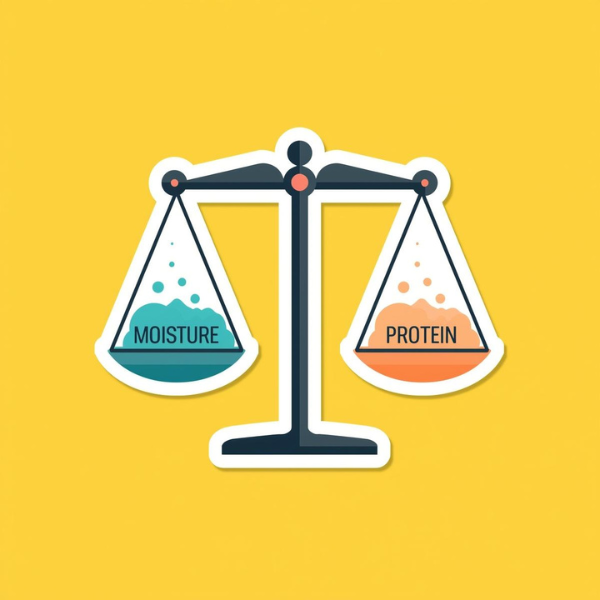
It is so easy to get tripped up trying to figure out whether your hair needs moisture or protein, because the signs can look similar, and one wrong move can make your hair feel even worse. One week you’ll be adding moisture, and your hair still feels “blah”, the next week you try protein, and suddenly it feels stiff. The truth is, your hair will tell you exactly what it needs when you slow down and pay attention to how it feels, how it behaves during detangling, and how it responds after wash day. When you start listening to your hair (instead of guessing), you can adjust with confidence and keep your routine simple and effective. I learned the hard way that guessing keeps you stuck. Once I started tracking my routine and results, I began to learn what my hair needed in real time. If you’re tired of trial-and-error, this hair journal will change the game for you.
🔎Signs to look for:
Too much protein
FAQ-If you are protein sensitive, use protein less often and keep it light (hydrolyzed proteins in conditioners can be enough).
Hair feels stiff, brittle, and snaps easily.
- Hair feels rough.
- More breakage (little broken pieces of hair when detangling or styling)
- Endless knots and tangles.
✔️Quick fixes that actually help:
- Avoid protein for the next 1-2 weeks (avoid products labeled as, strengthening, repair, keratin, bond-building, or reconstuctor)
- Clarify once to reset. (use a clarifying shampoo one time to remove protein so that moisture can actually get in)
- Deep condition with moisture and heat. (20-30 minutes with a warm cap. This helps soften the hair and restore pliability faster)
- Add slip + softness (right after rinsing, apply a slippery leave in and follow up with a creamy moisturizer. Seal your ends lightly with a light oil or butter)
- Be extra gentle (detangle in sections with a leave in conditioner, avoid tight styles and heavy manipulation)
🔎Signs to look for:
Not enough moisture
- Hair feels dry to the touch.
- Hair feels dry within a day after wash day (moisture won’t last)
- Hair snags when detangling, even with product in it.

✔️Quick fixes that actually help:
- Rehydrate immediately (water first.)
- Moisturizing deep conditioner + heat
- Seal and lock the moisture in
- Mid week moisture refresh (lightly mist hair with water and smooth a bit of leave in over it)
- Add a tiny bit of moisturizing cream to your ends.
Build-up is blocking moisture and causing breakage
🔎Signs to look for:
• Your scalp itches or flakes soon after wash day.
• Your hair looks dull, feels coated, and water beads up on the strands.
• Your products suddenly “stop working.”
✔️Quick fixes that actually help:
• Clarify every 3-6 weeks (more often if you use heavy gels, butters, or lots of dry shampoo).
• Use a gentle clarifying shampoo and follow with a moisturizing conditioner.
• Do not forget your scalp. A clean scalp supports healthy growth and reduces inflammation.
Click here to get my scalp condition tracker.
Detangling is the real source of your breakage
Detangling can cause breakage when you are forcing knots apart-every snag creates tension that snaps weak spots along the strand, especially at the ends. If you detangle dry hair using a fine-tooth comb, rush through sections, or start at the roots, you are basically pulling tangles tighter instead of letting them slip out. Over time, that repeated tugging leads to broken pieces, thinning ends, and less length retention-even if you are doing everything else right. You may find this previous article helpful about the top detangling brushes for type 4 hair.
Discover how the right brush can transform Type 4 hair
🔎Signs to look for:
• You see lots of short broken pieces in the sink (not just shed hairs with white bulbs). • You hear snapping while detangling. • You get fairy knots and single-strand knots constantly.
✔️Quick fixes that actually help:
• Detangle in sections (4-8) so you are not ripping through a whole head at once.
• Detangle on damp hair with conditioner that has slip. Use your fingers first, then a wide-tooth comb or detangling brush if needed.
• Start at the ends and work up. Rushing this step costs you inches. 📏
Too much manipulation (hands in hair all day)
🔎Signs to look for:
• Breakage at the crown from constant fluffing or restyling.
• Ends feel thin or “see-through” compared to your roots.
• Styles do not last because hair is constantly being disturbed. Quick fixes that actually help:
• Choose 1-2 low-manipulation styles per week (twists, braids, buns, claw-clip styles, stretched puffs).
• Set it and leave it: protect your style at night and refresh lightly instead of redoing everything.
• If you love daily styling, pick a style that lets you touch your hair less (a stretched style is usually kinder than daily wash and gos)
Your ends are not protected
🔎Signs to look for:
•Split ends, frequent tangles at the tips, and constant knotting.
• Your hair grows but the ends never look fuller over time.
Breakage shows up most when you take down a style.
✔️Quick fixes that actually help:
• Tuck your ends: buns, French rolls, twists, braids, claw clips, and low tucked styles are your friend.
• Seal your ends after moisturizing. Ends are the oldest part of your hair and need extra love.
• Sleep in a satin bonnet or on a satin pillowcase. Cotton is an end destroyer.
Tension or heat is thinning your hair
🔎Signs to look for:
• Edges feel weaker or your hairline looks less full.
• You notice breakage in the same spots (around the perimeter or crown).
• Heat-styled pieces look straighter and will not revert fully.
✔️Quick fixes that actually help:
• Reduce tension: avoid tight ponytails, heavy extensions, or braids that pull.
• If you use heat, keep it occasional, use a heat protectant, and choose lower temperatures.
• Try stretching methods that do not rely on high heat: banding, African threading, chunky twists, or braid-outs.
You are skipping trims when you actually need them✂️
🔎Signs to look for:
• Your ends snag no matter how much you detangle.
• You have split ends that travel up the strand.
• Your hair looks thinner at the bottom than it used to.
✔️Quick fixes that actually help:
• Trim or dust when your ends tell you, not just on a random calendar.
• If you are nervous, start with a small dusting and reassess after 6-8 weeks.
• Healthy ends retain length better than damaged ends that keep breaking.
Your routine is inconsistent, so you cannot see patterns
🔎Signs to look for:
You switch products every week and never know what truly works.
• Your wash day timing changes constantly (2 weeks, then 5 days, then 3 weeks).
• You are not sure what triggers dryness, shedding, or scalp irritation.
✔️Quick fixes that actually help:
• Build a simple “starting lineup“: one cleanser, one conditioner, one leave-in, one styler, and one sealing product.
• Run it for 4-6 weeks before making big changes. Consistency creates clarity.
• Use a tracker to log wash day, products, and how your hair feels.
Download my free hair tracker
A simple 7-day reset plan for stalled length retention
If you are not sure where to start, do this one-week reset. It is gentle, realistic, and it helps you see what your hair responds to.
Day 1: Clean slate wash day
Shampoo (or clarify if you have build-up), condition, then deep condition for 20-30 minutes. Detangle in sections. Apply leave-in, then seal your ends. Choose a low-manipulation style (twists, braids, or a stretched bun).
Day 2-3: Hands off
Do not restyle. If your hair feels dry, lightly mist with water, smooth a small amount of leave-in onto the driest sections, and reseal your ends.
Day 4: Scalp check
If your scalp feels itchy or tight, do a gentle scalp massage with a light oil and keep it moving. If your scalp is flaky, note it in your tracker so you can see whether a product or routine change is triggering it.
Day 5-6: Protect your ends
Refresh your style without over-manipulating. If you wear your hair out, tuck your ends at night with a bonnet and consider pinning or twisting the ends so they are not rubbing on clothes.
Day 7: Review and plan
Look back at the week: what felt better, what felt worse, and when? That is your roadmap. Repeat what worked for the next two weeks before changing anything else.
Quick FAQ
How do I know if I am seeing shedding or breakage?
Shed hair usually has a small white bulb at the end and the strands can be long. Breakage is often shorter pieces with no bulb, especially if they look uneven. Seeing some of both is normal, but constant short pieces usually means your routine needs a tweak.
What if my hair grows in some spots but not others?
That usually points to friction, tension, or dryness in specific areas. The crown and edges often need extra moisture, gentler styling, and less manipulation.
How long does it take to see length retention improvements?
Most people notice less breakage and easier detangling within 2-4 weeks. Visible length changes take longer because you are stacking months of retained growth. The key is consistency.
Final thoughts
If your natural hair feels like it is not growing, do not panic. In most cases, you are growing hair – you are just losing it at the ends. Use the checklist, choose two fixes, and give your routine time to work.
Want the easiest way to spot patterns and stay consistent? Download my free hair tracker here:
https://subscribepage.io/HF4LNG
When you are ready, you can turn this checklist into a monthly routine: clarify as needed, deep condition consistently, protect your ends, and keep your hands out of your hair. Your length will thank you. 💛
Here are some related articles you might find helpful